
Dentist Financing Without Insurance: The Step-by-Step Operator Playbook to Cut the Bill, Phase Treatment, and Pay Safely
No dental insurance doesn’t mean you have to accept the first number you hear.
It means you have to run the process like an operator: get the plan in writing, separate “today relief” from “final repair,” reduce the scope to the phase that matters now, and only then choose how to pay.
This page is a no-insurance financing field guide—not “approval hacks.” It’s designed to prevent the two mistakes that cost uninsured patients the most:
- Financing before the plan is final (you borrow too much, then the plan changes)
- Choosing by monthly payment instead of total dental cost + penalty triggers
Scope note:
For non-credit payment levers first →
For credit product types only →
Quick reality check (read this before you sign anything)
The CFPB reports that medical credit cards and healthcare financing plans offered at the point of care can involve lack of transparency and financial risks for consumers.
If you see “no interest if paid in full,” treat it as deferred interest until proven otherwise. CareCredit explains interest can accrue from the purchase date and may be charged if the promotional balance isn’t paid in full by the end of the promotional period.
Verify line:
“Is this a true installment plan with a stated APR and schedule, or promotional financing with a paid-in-full deadline?”
Step 0 — The “point of no return” you should understand
If decay reaches the nerve, a small repair can turn into a root canal + crown decision. That doesn’t mean panic—just don’t delay because you’re choosing a payment method.
Operator authority line: Speed matters for clinical reasons; financing can wait 24–72 hours if you separate stabilization from the full plan.
Typical no-insurance cost ranges (quick anchors)
Prices vary by region and complexity. Use these as decision anchors—not promises.
- Emergency exam + X-ray → low hundreds
- Simple extraction → low to mid hundreds
- Surgical extraction → higher hundreds to four figures
- Filling → low hundreds
- Root canal → four figures
- Crown → four figures
- Deep cleaning / perio work → mid hundreds to four figures
Operator authority line: Locking scope matters more than hunting a miracle lender.
Step 1 — Stabilize first (don’t finance the final plan on day one)
Best move when uninsured:
- Exam + imaging
- Stabilization (temporary fix, pain control, antibiotics if needed)
- Written plan for the full work later
Operator line: Separate today relief from final repair.
Step 2 — Get a written estimate you can trust
Ask for:
- Itemized procedure list
- What’s included vs billed separately
- Payment timing and deposits
- What could change the price
Ask this exactly:
“Can you print the itemized treatment plan and tell me what’s included versus add-ons before I decide how to pay?”
Step 3 — Where uninsured patients overpay
Common add-ons that inflate quotes:
- Imaging upgrades
- Sedation types
- Lab or material upgrades
- Temporary restorations
- Follow-up visits
- Adjunct procedures
Stop-it-now questions:
- Which imaging is included?
- Is sedation included or separate?
- Are temps and follow-ups included?
- What usually causes this quote to increase?
Step 4 — Cut the bill using levers you control
Lever A: Phase treatment
- Phase 1: stabilize
- Phase 2: definitive repair
- Phase 3: elective upgrades
Lever B: Ask for clinically safe alternatives
“Are there lower-cost options that don’t raise failure risk?”
Lever C: Ask for prompt-pay or cash discounts
“Do you offer a cash or prompt-pay discount for Phase 1 or Phase 2?”
Lever D: Minimum viable plan
“What’s the minimum plan that prevents bigger damage?”
Step 5 — Negotiate like a professional
Phasing script:
“I want to proceed, but I need to do this in phases with clear costs for each phase.”
Quote stability script:
“Can we list the common add-ons that change the price before I commit?”
Financing script:
“What options do you offer in-house and through third parties—and can I see the terms in writing?”
Step 6 — Choose your payment path (ranked by safety)
Option 1: In-house payment plan
Best for phased care when written and itemized.
Verify:
- Deposit
- Number of payments
- Late fees
- Scope covered
Option 2: Personal loan (dental loan)
Best for predictable dental loans.
Verify:
- APR
- Origination fee
- Prepayment rules
- Total repayment
Option 3: Dental savings plan
Helps only if provider participation and fee schedule actually reduce your cost.
Option 4: Third-party installment financing
Safe only when it’s true installment—not promo credit.
Option 5: Promo credit (highest risk)
Use only if you can hit $0 one month early and understand deferred interest.
The uninsured pass/fail checklist
- Scope clarity: written + itemized
- Phase control: stabilize first
- Plan identity: in-house vs lender
- Penalty trigger: explain it in one sentence
- Over-borrowing: finance confirmed phase only
Bottom line
Without insurance, you win by winning the process:
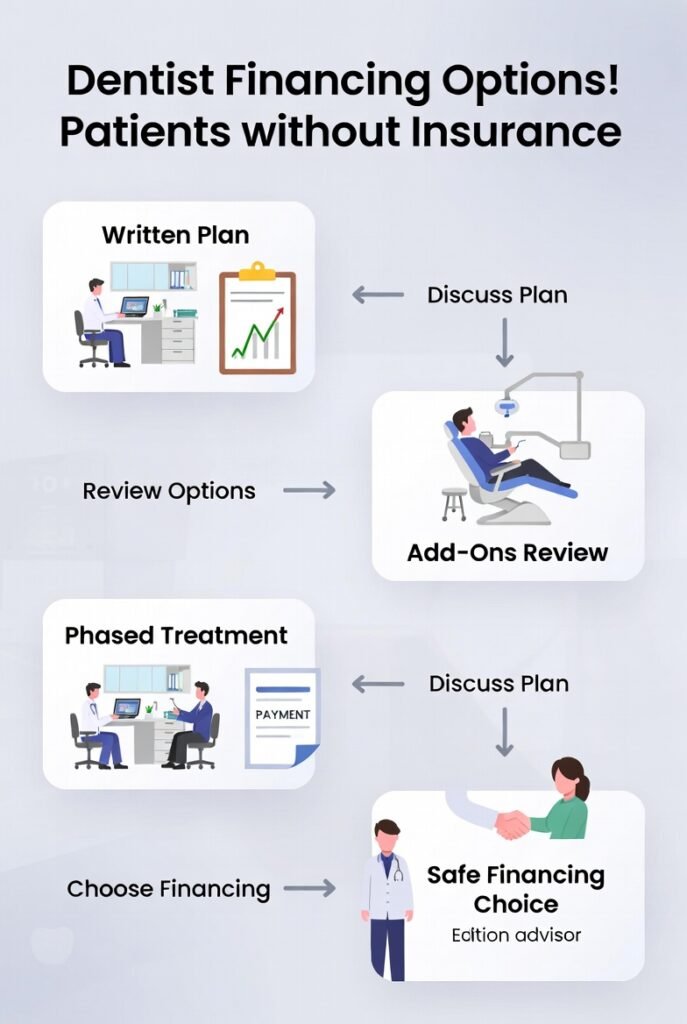
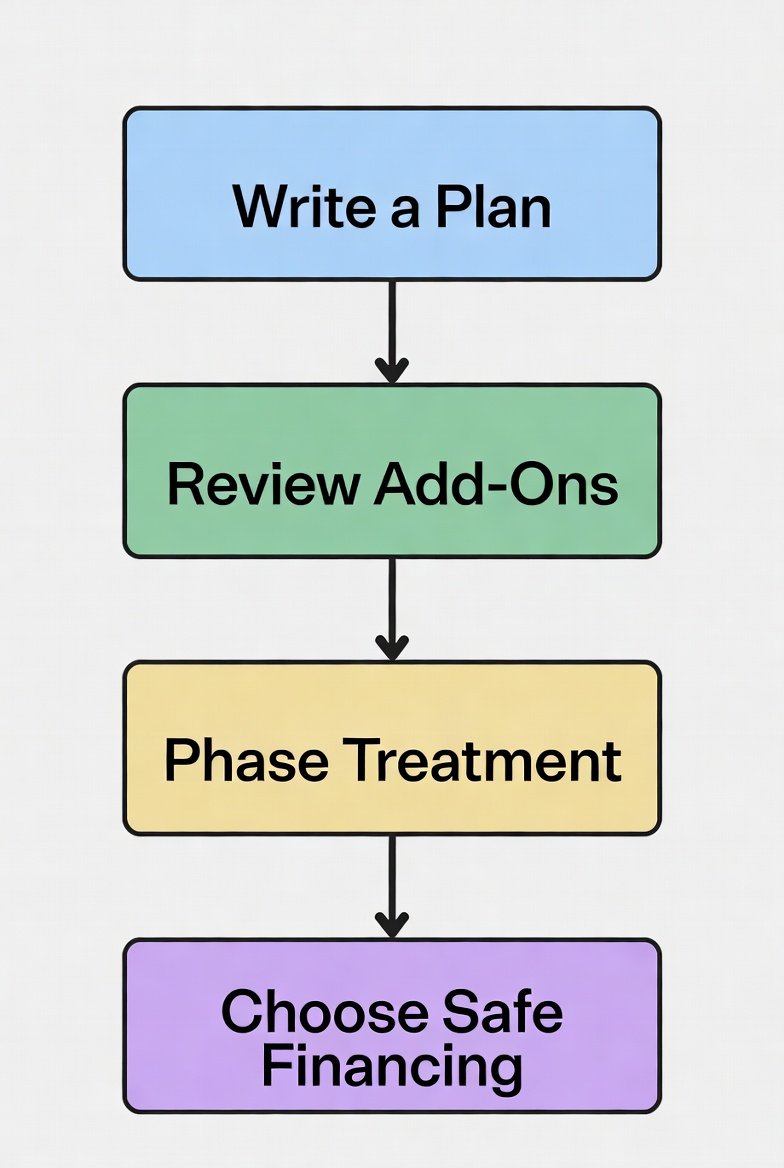
Written plan → phased scope → verified add-ons → safe payment path.
Start with non-credit options →
FAQs
Can I get dental work done without insurance
Yes. Many practices offer internal or external dental financing, and you can also use phased treatment and payment strategies.
What is the safest way to finance dental work without insurance
Stabilize first, get a written plan, phase treatment, and use a written in-house plan or clear installment loan.
How do I avoid deferred interest
Treat “no interest if paid in full” as deferred interest, confirm deadlines in writing, and pay to zero early.
Do dental savings plans help without insurance
They can if you can use a participating provider and the fee schedule meaningfully reduces your costs.