
Dental Financing With Bad Credit
If you have bad credit and a dental bill in front of you, the hardest part usually isn’t the number—it’s the pressure. Financing decisions often happen while you’re in pain, stressed, and rushed at checkout, which is exactly when people accept terms that are easy to get into and hard to live with later.
This page is a decision-rules hub for dental financing options with bad credit. It’s built to help you lower the bill before you borrow, avoid unstable terms, and choose payment options that still work if you have one rough month.
The Consumer Financial Protection Bureau (CFPB) has discussed risks with medical credit cards and healthcare financing plans, including consumer confusion and cost surprises tied to promotional structures.
Hub Map (Start Here)
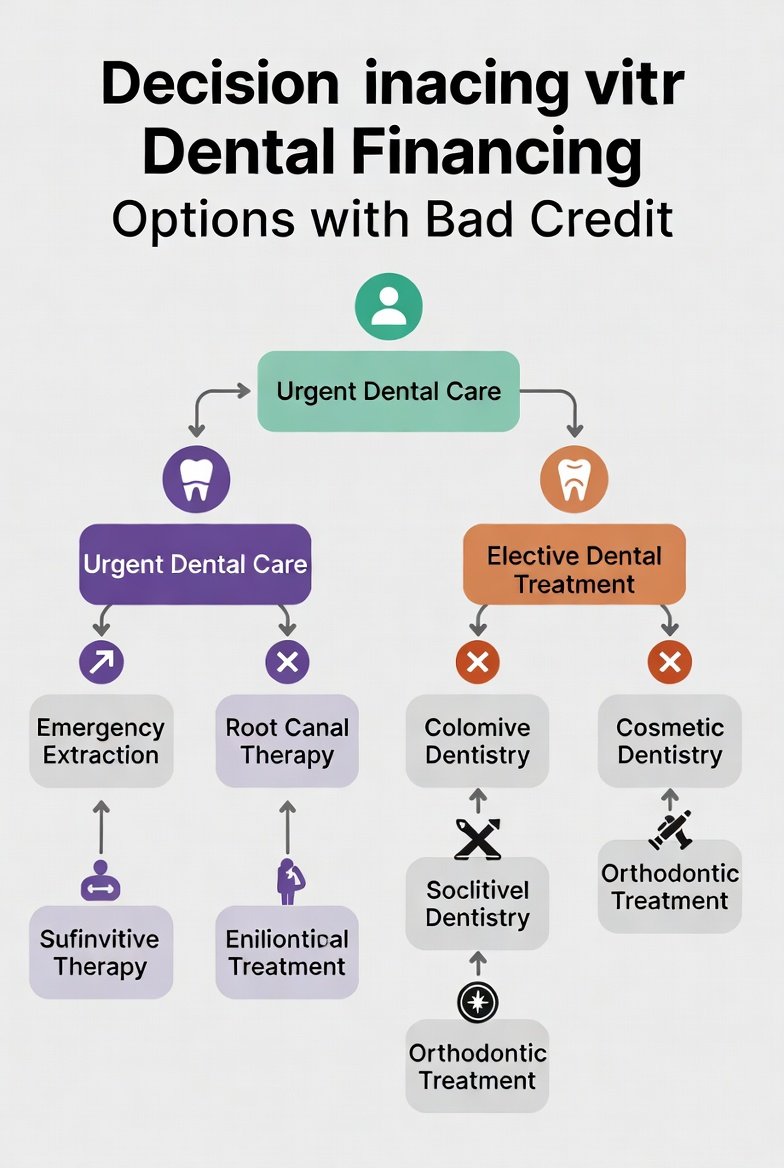
Step 1: Is this urgent or elective?
- Urgent pain / swelling / infection: Stabilize first → decide on financing after a written estimate.
- Not urgent: Compare options → reduce the bill → then pick a payment structure.
Step 2: Choose the safest lane (in order):
- Lower-the-bill paths (staged care, second quote, reduced-fee care)
- True in-office payment plan (written, realistic, short)
- Installment loan / patient financing (clear APR + term)
- Promo financing / medical credit card (only if payoff math is easy)
- High-risk “no credit check” offers (highest caution)
Your Three Goals (In Order)
Goal 1: Lower the bill before you finance it. Smaller balances unlock safer options.
Goal 2: Choose a plan that won’t break your month. A monthly payment isn’t safe if one late month causes penalties.
Goal 3: Avoid a second crisis. Dental care shouldn’t create a new credit emergency.
Score-Band Playbook (Approval Reality)
These are realistic lanes, not guarantees. Outcomes vary by income, debt, and recent credit activity.
- 720+ (Good/Excellent): More options, lower cost—still verify promo terms.
- 660–719 (Fair): Prequalification more likely; keep balances smaller.
- 580–659 (Rebuilding): Higher costs; lowering the bill is critical.
- Below ~580: Fewer approvals; safest path is assistance-first care and written office plans.
Operator rule: When the score is lower, the safest financing often means financing less.
What Affects Approval Besides Score
- Income stability
- low income dental financing
- Debt-to-income pressure
- Recent delinquencies or collections
- Number of recent applications
- Down payment ability
- Alternative underwriting (varies by product)
Verify before applying: “Is approval mostly score-based, or do you also consider income or down payment?”
Will This Hurt My Credit?
Not all applications are equal.
- Hard inquiry: Can affect your credit profile
- Soft inquiry: Typically does not affect scores the same way
Ask before applying: “Is this a hard inquiry, a soft inquiry, or no inquiry?”
Lower the Bill First (The Move Most People Skip)
If your credit is bad, reducing the bill is often the difference between a safe plan and a high-cost outcome.
Ways people lower the bill:
- Get a second quote or alternative plan
- Stage treatment (stabilize first, phase the rest)
- Check assistance-first care if income is tight
Adult Medicaid dental coverage varies by state and procedure—always verify eligibility and provider acceptance.
Your Options Map
1) True In-Office Payment Plan
- Pay the dental office directly
- Often no traditional credit check
- Safety depends on written terms
Best for: smaller balances and short timelines.
2) Installment Loan / Patient Financing
- Third-party lender
- Clear APR, term, and schedule
- Dental loan
Best for: medium balances when terms are stable and understandable.
3) Promo Financing / Medical Credit Card
Often includes deadline-based pricing. If payoff math is tight, risk is high.
Best for: only when full payoff before deadline is easy.
4) High-Risk No Credit Check Offers
Fast approval but often harsh terms.
Best for: usually a last resort after reducing the bill.
The Point of No Return
The point of no return is signing a plan where the cost outcome changes sharply if you miss a deadline—especially if you don’t fully understand the “$1 remaining” consequence.
If it’s not in writing, pause.
Quick Payoff Math (Reality Gate)
Required monthly payoff ≈ Balance ÷ Months
Balance | 6 mo | 12 mo | 18 mo | 24 mo |
$600 | $100 | $50 | $34 | $25 |
$1,200 | $200 | $100 | $67 | $50 |
$2,400 | $400 | $200 | $134 | $100 |
$3,600 | $600 | $300 | $200 | $150 |
If this already stretches your budget, deadline-based promos are high risk.
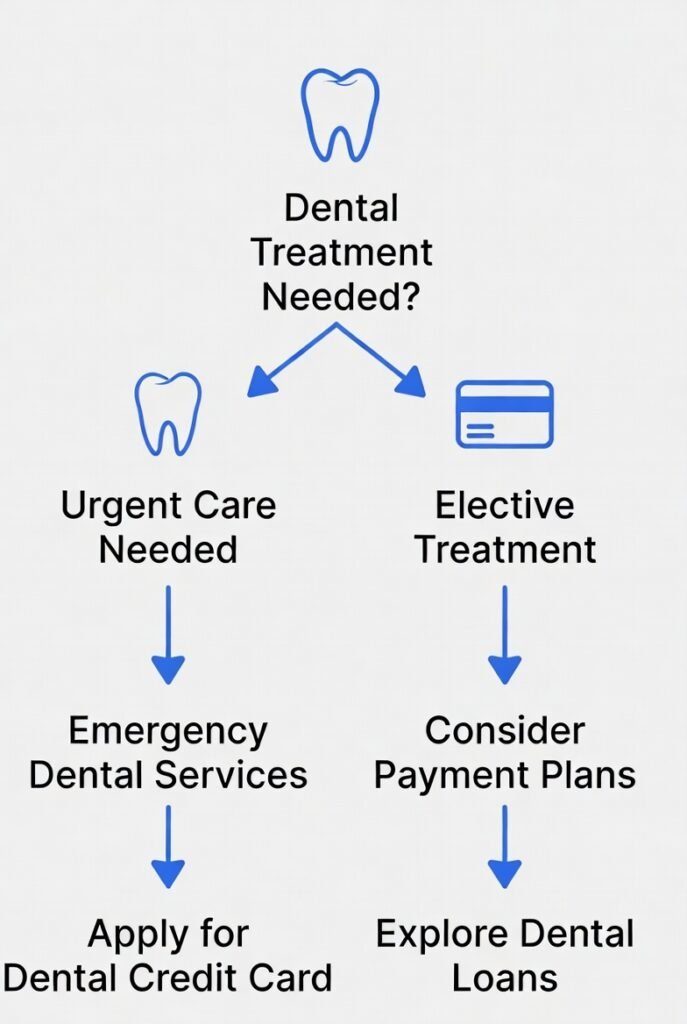
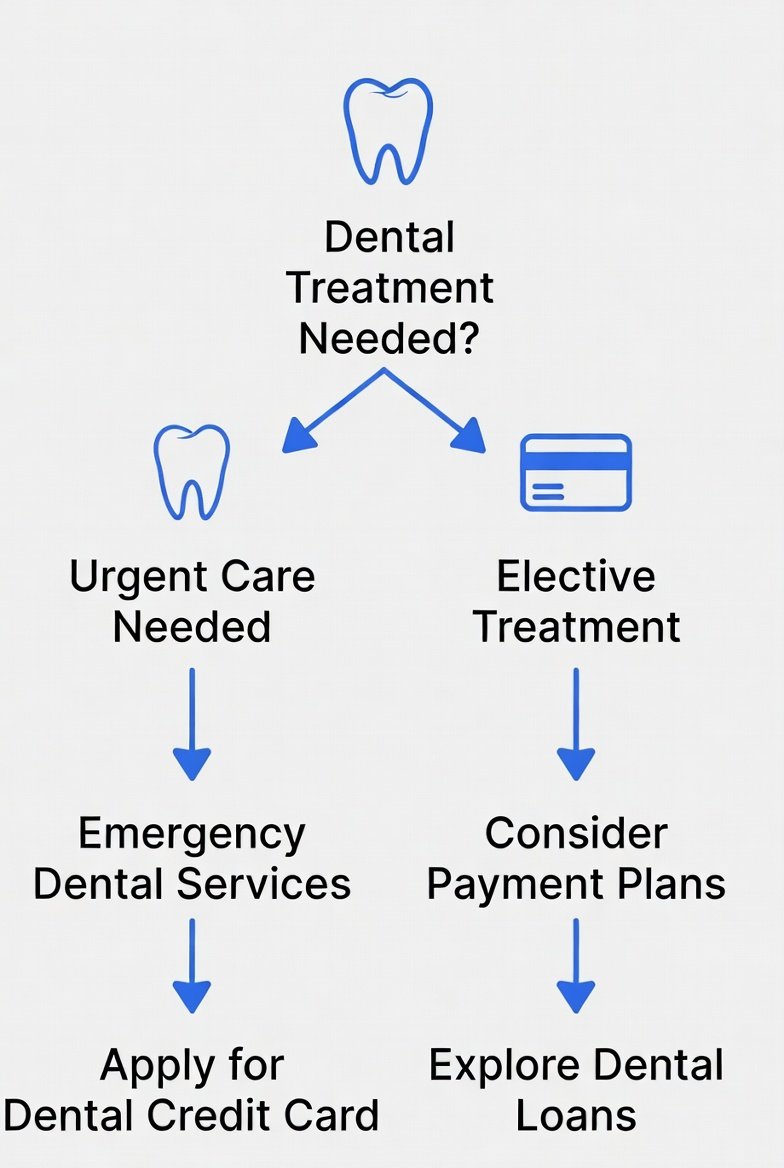
Emergency vs Elective Decision Tree
- Emergency: Evaluate → stabilize → get written estimate → choose payment plan.
- Elective: Written plan → compare options → reduce scope → choose safest lane.
What to Avoid (Bad Credit Version)
- Terms not provided until signing
- Rushed decisions
- Unclear deadline consequences
- Plans that only work in a perfect month
- Multiple applications without knowing inquiry type
Final Decision Table
Situation | Best move | Risk to avoid |
Urgent pain | Stabilize + written estimate | Rushed signing |
Large quote | Stage care | Over-financing |
Rebuilding credit | Ask inquiry type | Hard pull damage |
Promo offer | Use payoff math | Deadline trap |
Low buffer | In-office / assistance | Fee spiral |
Bottom Line
Dental financing with bad credit is safest when it’s boring: reduce the bill, force terms into writing, and choose a plan that still works if one month goes sideways. If the plan depends on a deadline you can’t comfortably meet, choose a simpler structure instead.