
CareCredit for Dental: How It Works, Deferred Interest Traps, and the Payoff Rules That Keep You Safe
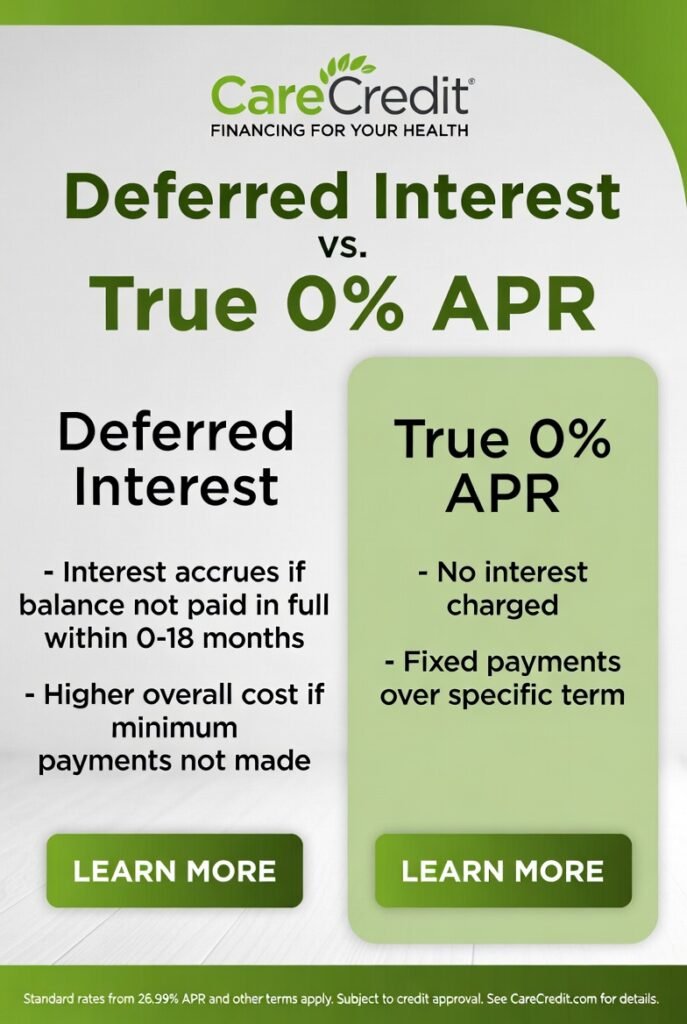
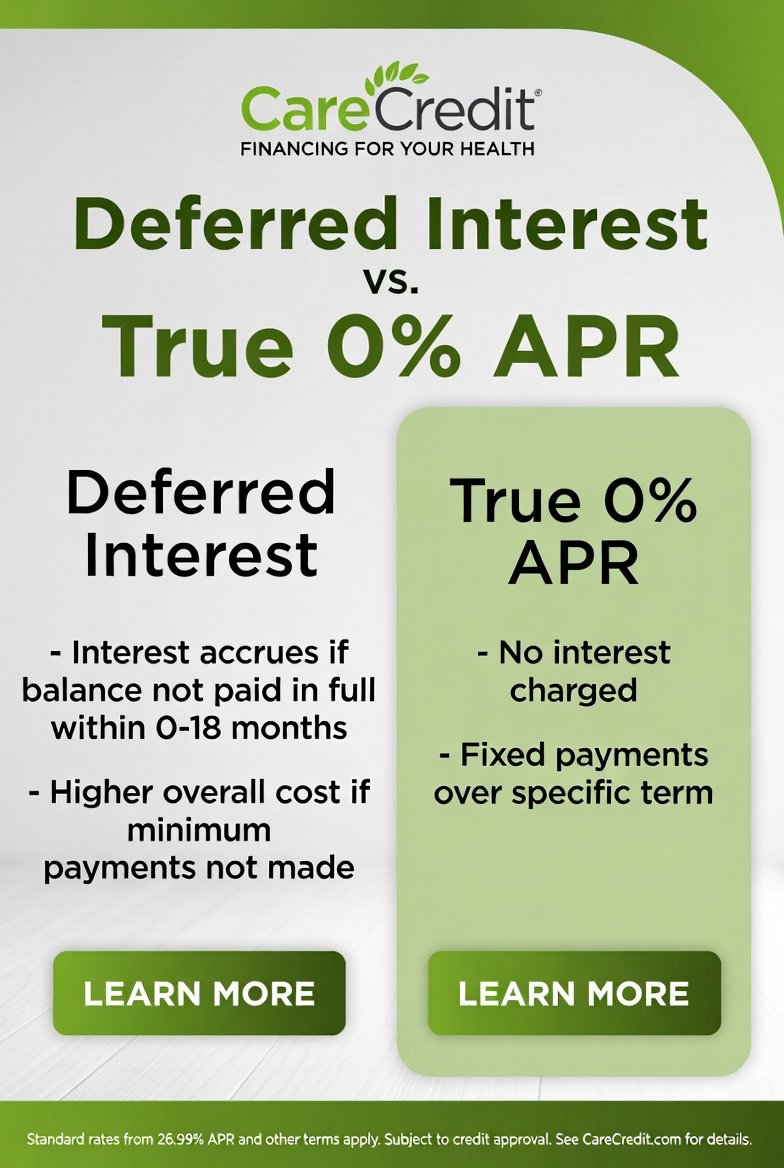
CareCredit can be useful for dental work—but only if you understand one thing clearly: many “no interest” offers are not true 0% interest. They are typically deferred interest offers, where interest runs in the background and is avoided only if you follow the rules exactly.
This guide is built for decision clarity: how CareCredit works at the dentist with Payment plans, what can go wrong, and the payoff controls that keep you safe.
What CareCredit Is for Dental (Plain English)
CareCredit is a health and wellness credit card accepted by participating dental providers. You apply, get approved (or not), and use the card to pay the office for eligible services.
What matters is not the card itself—it’s the promotional financing assigned to your purchase.
Operator rule: Treat CareCredit as a credit contract, not a payment plan.
The Fast Decision Menu (Choose Your Risk Level)
When a dental office offers CareCredit, you’re usually choosing between:
- Deferred interest promo (“No interest if paid in full”)
Cheapest only if you pay the promo balance in full by the deadline. - Reduced APR / fixed-payment promo
More predictable payments, but you may pay interest.
Best-fit rule:
- Choose deferred interest only if you can confidently hit the payoff target.
- Choose reduced/fixed APR if you need predictability.
Verify before you swipe:
“Which promo will this exact charge be placed under, and what is the exact payoff deadline date?”
What the Terms Really Mean (The Part People Miss)
CareCredit materials explain that:
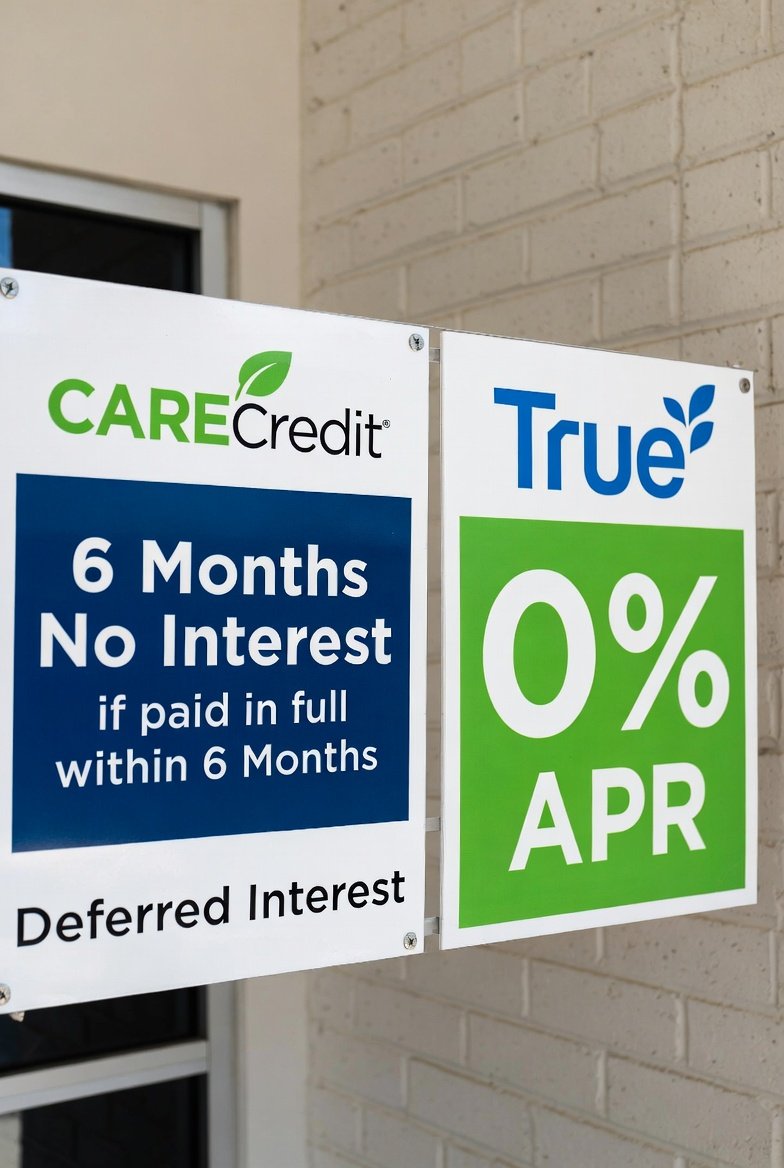
- Interest accrues from the purchase date on deferred-interest promos.
- Interest is removed only if the balance is paid in full by the promo deadline.
- Minimum payments may not pay off the promo balance in time, depending on purchase size, promo length, and payment allocation.
CFPB guidance explains why “if paid in full” language is a red flag and how deferred interest differs from true 0% APR.
Reality anchor: Bad CareCredit documentation commonly shows 32.99% APR if a promo is not paid in full (your exact rate depends on your agreement—always verify).
The Point of No Return
With deferred interest, people get hit in two ways:
- They don’t pay the promo balance in full by the deadline—even if only a small amount remains.
- They become seriously late. Consumer guidance notes that being 60+ days late before a deferred-interest period ends can trigger interest being charged.
Operator rule: Never ride the line. Build a buffer.
60-Second Checklist Before You Swipe
Ask these five questions:
- Is this deferred interest (“no interest if paid in full”)?
- What is the promo length and exact payoff deadline date?
- Does my purchase qualify for this promo?
- What happens if I’m late, and what fees apply?
- How are payments allocated if I have more than one promo balance?
Verify: Screenshot or photograph the promo terms shown at checkout.
The Payoff Controls That Keep You Safe
Control 1: Set Your Own Safe Payment
Minimum payments are not a payoff plan.
Safe monthly payment formula:
Promo balance ÷ (promo months − 1)
This creates a one-month buffer.
Mini Table – Safe Payoff Targets
Promo Balance | Promo Length | Safe Payment |
$1,200 | 12 months | ≈ $110/mo |
$2,400 | 18 months | ≈ $142/mo |
$3,600 | 24 months | ≈ $157/mo |
If your minimum payment is below this number, you’re not safe—you’re hoping.
Control 2: Avoid Multiple Promo Balances
Multiple promos complicate payment allocation and increase risk.
Operator rule:
- One promo at a time is safest.
- If multiple promos exist, create a payoff target for each and overpay beyond the minimum.
Control 3: Autopay + Monthly Audit
Autopay prevents misses—but you must still:
- Check promo balance monthly
- Confirm it trends to $0 one month early
- Increase payment if it doesn’t
Operator Mini-Scenario
Mistake: $2,000 on a 12‑month deferred-interest promo, minimum payments only.
Consequence: $87 remains at month 12 → interest charged.
Fix: $2,000 ÷ 11 ≈ $182/month from the start.
When CareCredit for Dental Is a Good Fit
CareCredit can work if:
- You can meet the safe payoff target with buffer
- You need a short-term bridge for urgent care
- Other options are worse or unavailable
When It’s a Bad Fit (Red Flags)
Avoid deferred interest if:
- Payoff depends on perfect months
- Income is variable
- Treatment is multi-stage with ongoing charges
- You’re already juggling multiple promos
CareCredit vs Alternatives (Decision Rules)
- Can pay in full by deadline: Deferred interest can be low-cost
- Can’t guarantee payoff: Fixed-payment loan or in-office plan is safer
- Unsure: Choose predictable payments over deadline cliffs
Dental credit card overview
Dental financing options
Deferred interest explained
Bottom Line
CareCredit for dental can work only if you treat deferred interest like a deadline contract—not a casual monthly plan.
Best if: You can clear it early
Alternative: Fixed-payment loan or written in-office plan
Avoid if: Payoff relies on hope