
Dental Credit Card
Overview
A dental credit card is one of the most common financing offers presented at a dental office, especially when treatment costs are higher than expected. While it can be convenient, it is still a credit product with specific terms, promotional rules, and potential risks.
This guide explains how dental credit cards work, how promotional financing (including deferred interest) really behaves, the hidden costs patients often miss, and how to verify terms at the front desk so you don’t accidentally agree to an expensive outcome.
What a “Dental Credit Card” Usually Means
Most dental credit cards are healthcare credit cards issued by third-party lenders that partner with dental offices. You apply at checkout and, if approved, receive a credit limit usable at participating providers.
Key traits:
- Revolving credit line
- Possible promotional financing
- Minimum monthly payments required
- Costs determined by promo rules, APR, and payoff behavior
Operator note: This is not the same as an in-office payment plan. It is a credit agreement—treat it like a contract.
Hub Map: Choose Your Lane
- Payoff is easy within promo window: Promo financing may work if terms are verified.
- Payoff math is tight: Installment loan or in-office plan is often safer.
- Under pain pressure: Stabilize first, get a written estimate, then decide.
Dental financing options overview
Two Main Types of Dental Credit Card Offers
1) Standard APR Credit
- Balance accrues interest at stated APR
- Total cost depends on payoff speed
2) Promotional Financing
Common language includes:
- “No interest if paid in full within X months”
- “0% promotional financing”
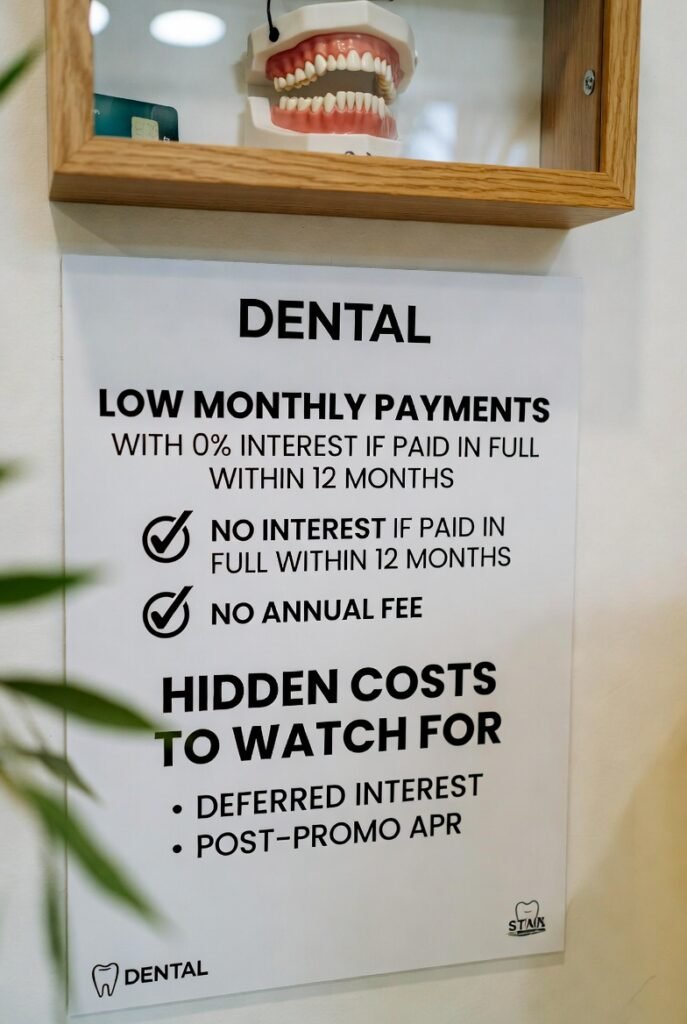
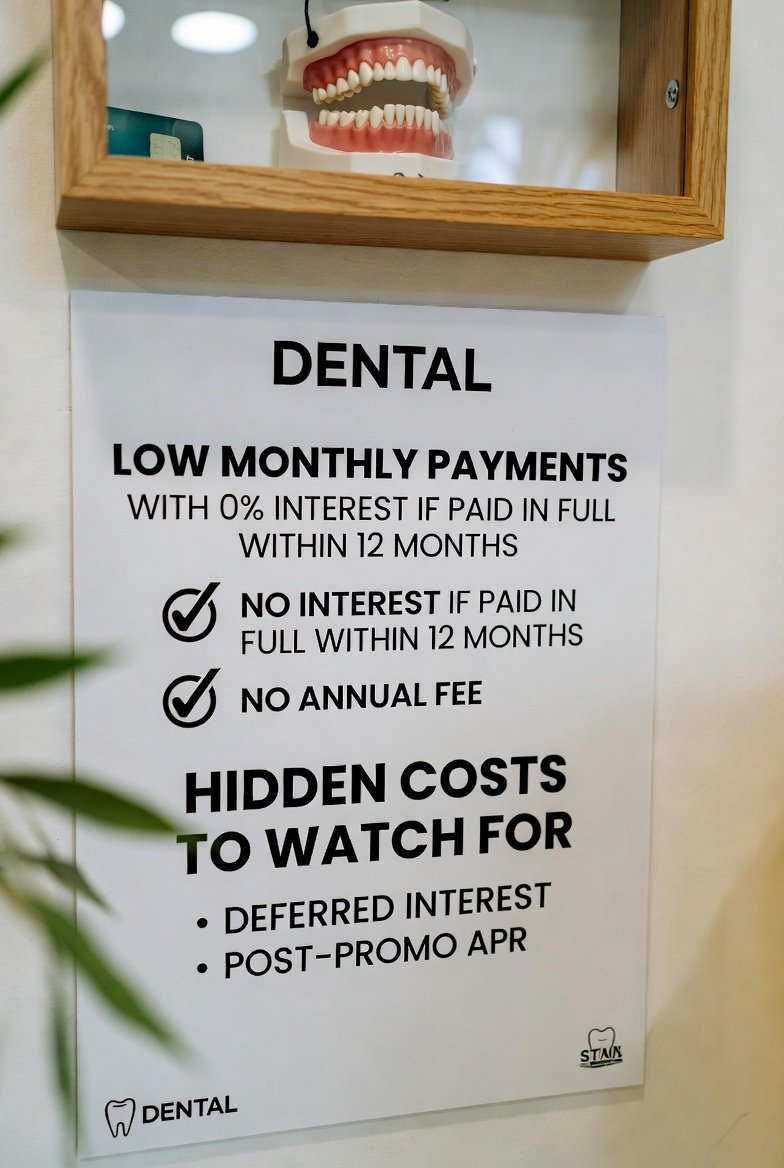
Many promos are deferred interest, meaning interest can accrue from day one and may be charged if the balance is not paid in full by the deadline.
Hidden Costs to Watch
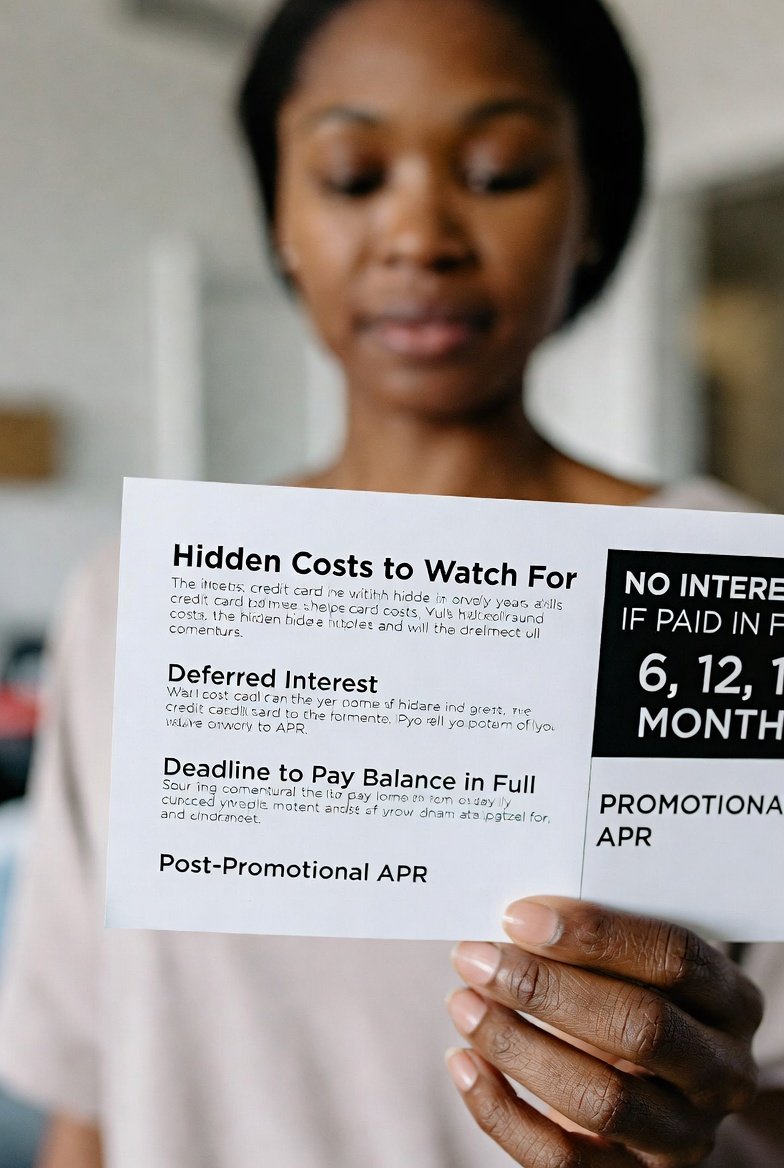
- Deferred interest: Miss the deadline and accrued interest may apply.
- Deadline consequences: Even $1 left can change the cost outcome.
- Post-promo APR: Remaining balances may accrue interest at a higher rate.
- Late payment triggers: Fees or loss of promo terms (varies).
- Network limits: Card usable only at participating providers.
- Credit utilization impact: Large balances can affect credit profiles.
Quick Payoff Math (Safety Check)
Required monthly payoff ≈ Balance ÷ Promo months
Balance | 6 mo | 12 mo | 18 mo | 24 mo |
$600 | $100 | $50 | $34 | $25 |
$1,200 | $200 | $100 | $67 | $50 |
$2,400 | $400 | $200 | $134 | $100 |
$3,600 | $600 | $300 | $200 | $150 |
If this number is already tight, promo financing is high risk.
Front Desk Verification Script
Ask these before applying:
- Is this a hard or soft inquiry?
- Is this deferred interest or a true 0% intro APR?
- What happens if I owe even $1 at promo end?
- What is the post-promo APR, and do late payments change promo terms?
If answers aren’t clear or written, pause.
Dental Credit Card vs In‑Office Payment Plan
Dental credit card:
- Third‑party lender
- Promo rules may apply
- Risk of deferred interest
In‑office payment plan:
- Pay dentist directly
- Often simpler terms
- Get all terms in writing
In‑office payment plan checklist
Dental Credit Card vs Installment Loan
Installment loans are often safer when:
- APR and fees are explicit
- Term is fixed
- No deadline‑based pricing switches
The Point of No Return
The moment you sign a promo without understanding:
- Promo end date
- Paid‑in‑full requirement
- Balance‑remaining consequence
If you can’t explain it in one sentence, don’t sign.
Pass / Fail Safety Gate
PASS if:
- Total cash price is written
- Promo terms are written
- Payoff math fits with buffer
- Post‑promo APR is known
FAIL if:
- Terms shown after applying
- Balance‑remaining rule unclear
- Payoff depends on perfect months
Safer Alternatives
- True in‑office payment plans
- Installment loans with clear APR
- Reduced‑fee care or staged treatment
No credit check dental financing reality
Bottom Line
A dental credit card can work when payoff math is easy and terms are clear. Risk rises quickly when offers rely on strict deadlines. Verify deferred interest, confirm the $1 rule, and choose the option that still works if life gets messy.