
Dental Loans: Compare Personal Loans vs Promo Credit vs Payment Plans (and Avoid the Hidden Costs)
A dental loan is usually an unsecured personal loan you use to pay for dental care. People search for “dental loans” because they want one thing: a way to cover a big bill with clear terms—not a confusing offer made in the dental chair.
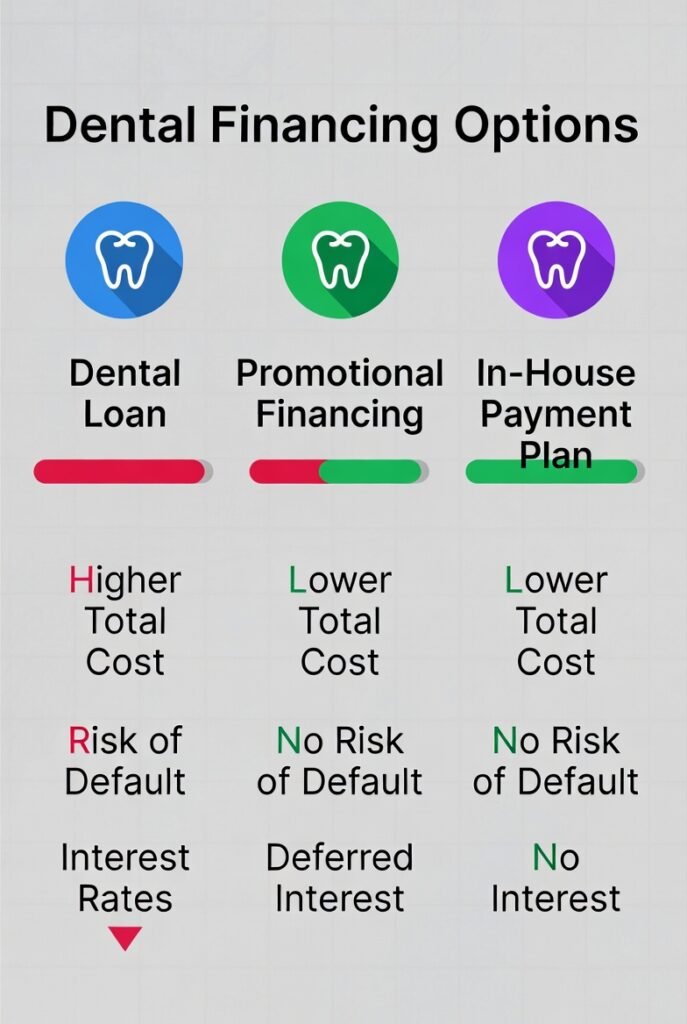
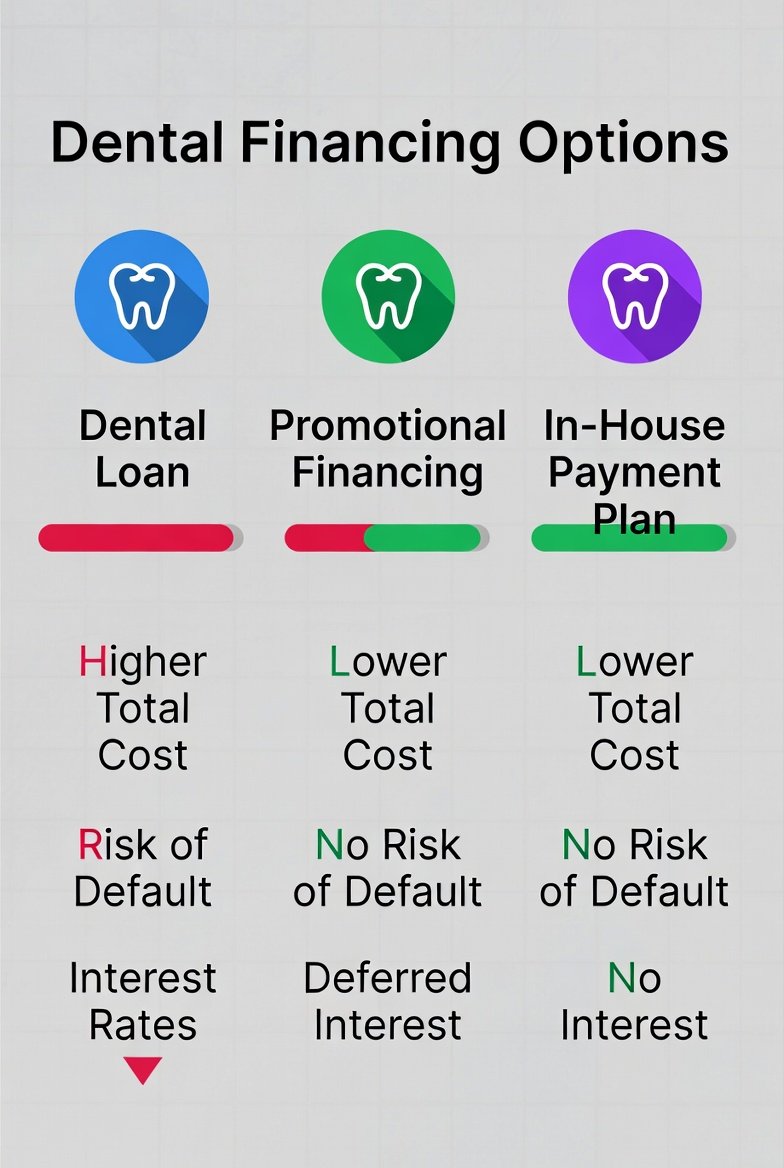
This hub compares the three paths patients often mix up:
- Personal loans (true dental loans): lump sum → fixed repayment schedule
- Promotional financing (promo credit / medical credit cards): “no interest if paid in full” offers that may include deferred-interest conditions
- In-house payment plans: the dental payment plans practice sets repayment terms, often for phased care
Scope note:
If you want safer non-credit ways to pay first (phasing, cash discounts, )negotiation costs, start here →
If you want how plans work step-by-step, start here →
Quick reality check (read this before you compare anything)
The CFPB warns that medical credit cards and healthcare financing plans can present transparency issues and financial risks for consumers.
On “no interest if paid in full” promos, deferred interest typically means interest accrues from the purchase date and may be charged if the promotional balance isn’t paid in full by the deadline—CareCredit explains this plainly.
Verify line:
“Is this a personal loan with a stated APR and term, or promotional financing with a ‘paid in full’ deadline?”
What counts as a dental loan
Most “dental loans” are simply personal loans used for dental bills (not a special dental-only product).
Why this matters: a true personal loan usually gives you:
- A stated APR
- A stated term
- A predictable monthly payment
- A clear total repayment you can estimate up front
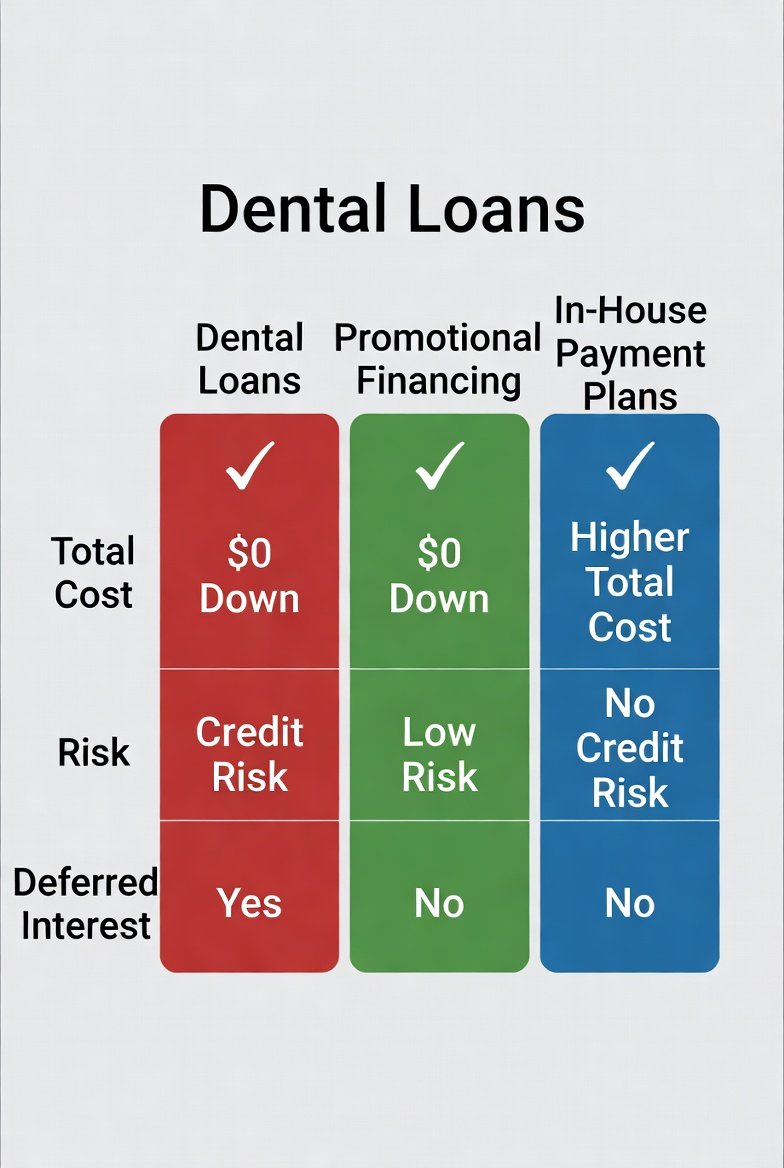
The clean comparison table (loan vs promo credit vs in-house plan)
Personal loan (dental loan)
Best for: Big balances, longer payoff, predictable terms
Hidden gotcha: Fees + long term stretch
Verify: APR, origination fee, prepayment rules, total repayment
Promo credit / medical credit card style
Best for: Only if you can pay off before promo end
Hidden gotcha: Deferred interest trigger
Verify: Promo end date, payoff rules, balance allocation, what happens if $1 remains
In-house payment plan
Best for: Phased care, short windows, fewer moving parts
Hidden gotcha: Vague terms or exclusions
Verify: Written plan, deposit, late fees, what’s included
Quick verdict:
- Want the simplest credit path → loan usually wins
- Want lowest-drama short-term path → written in-house plan
- Promo credit wins only when you can execute the deadline perfectly
Personal dental loans (the loan path)
How it works
- You apply for a personal loan
- You receive funds (or the lender pays the provider)
- You pay the dentist and repay monthly
Hidden costs to check
- APR (main cost driver)
- Origination fee
- Term length (longer term = more interest)
- Prepayment rules
Where loans fail in real life
- Borrowing before you have an itemized treatment plan
- Stretching the term to “make it affordable”
- Using a loan for work that could have been phased
Promo credit (deferred-interest risk in plain language)
Dental financing is often pitched as “no interest,” but the CFPB warns these offers can be less transparent and costly if conditions aren’t met.
One canonical explanation:
With deferred interest, interest can accrue from the purchase date. If the balance isn’t paid in full by the promo end date, that interest may be charged.
Operator rule: If you can’t confidently hit $0 one month early, don’t use deadline-based promo credit for large or staged treatment.
In-house payment plans (office-run)
The ADA notes practices may offer financing options either internally or through external programs.
In-house plans work best when:
- Treatment can be phased
- Terms are written and short
- Inclusions are itemized
Failure mode: vague terms + unclear what’s included.
The “Financing Desk Reality”
Most financing mistakes don’t come from bad intent. They come from time pressure and emotional overload. People anchor on the monthly payment and miss the penalty trigger—why deferred-interest products generate complaints.
Simple cost math (decision clarity)
Operator takeaway: Your best levers are:
- Borrow less by phasing
- Choose the shortest term you can reliably maintain
Promo credit is cheap only if paid in full. Miss the deadline and deferred interest can apply.
What to ask the dentist (6 questions)
- Can you print an itemized treatment plan?
- What’s required today vs what can be phased?
- What’s included vs billed separately?
- Is financing in-house or third-party?
- Is promo financing deferred interest and what’s the exact deadline?
- If the plan changes, what is your refund timeline?
The loan comparison checklist (pass/fail)
- APR (not just rate)
- Fees (origination, late, returned payment)
- Prepayment rules
- Term fit
- Total repayment estimate
Verify line:
“Is there an origination fee, and is there any prepayment penalty?”
Bottom line
For most people, a dental loan (personal loan) is the cleanest credit path:
one balance → stated APR → set term → predictable payoff.
If an offer says “no interest if paid in full,” assume deferred interest until proven otherwise.
If you want safer non-credit ways to pay first →
FAQs
Are dental loans different from personal loans
Most dental loans are unsecured personal loans used to pay for dental expenses.
What’s the biggest hidden cost in dental financing
Deferred-interest promotional terms can be a major hidden cost if the balance isn’t paid in full by the deadline.
Is promo financing the same as a 0% APR credit card
Not always. Promotional financing may include deferred interest and work differently than typical 0% APR offers.
How do I compare two loan offers quickly
Compare APR, fees, term length, prepayment rules, and total repayment—not just the monthly payment.