
Low Income Dental Financing
If you’re low income and you hear “dental financing,” it usually sounds like taking on debt. But the safest path for most people isn’t a new credit product first—it’s an assistance-first plan that lowers the bill before you spread anything out over time.
Here’s the core idea: reduce the price, then choose how to pay what’s left. That order protects you from the two outcomes that hurt people most:
- Signing something under pressure and later discovering expensive terms
- Delaying care until it becomes an emergency, when options shrink and costs rise
This page is a practical operator’s guide: where low-cost care actually comes from, how to verify it, and how to choose a payment options only when it’s truly safe.
What “Low Income Dental Financing” Should Mean (Assistance-First)
For low-income households, the smartest order is:
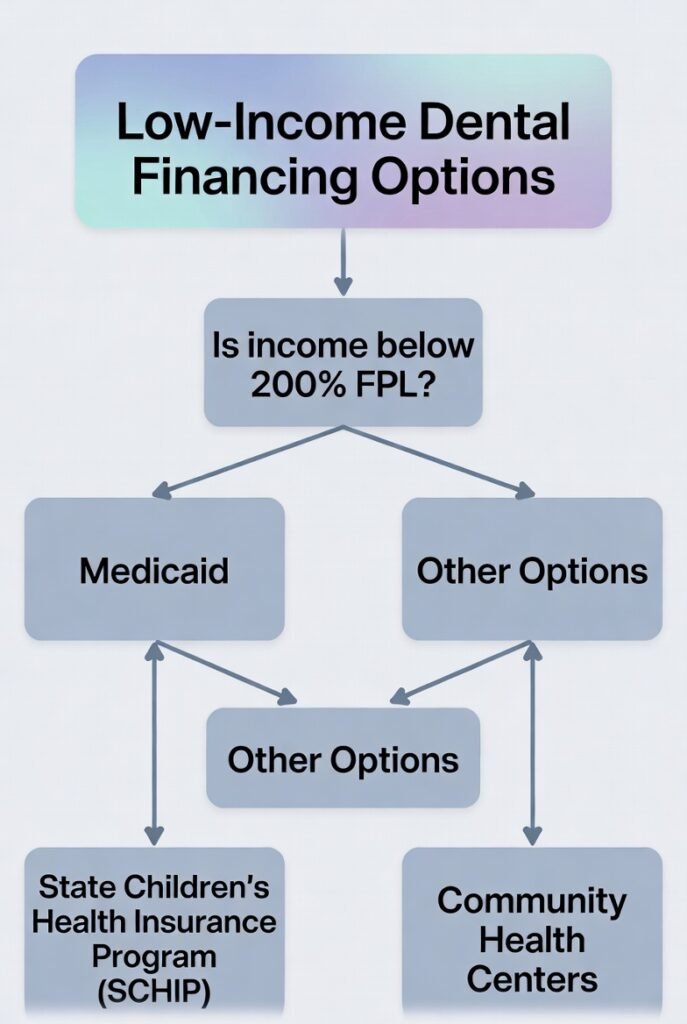
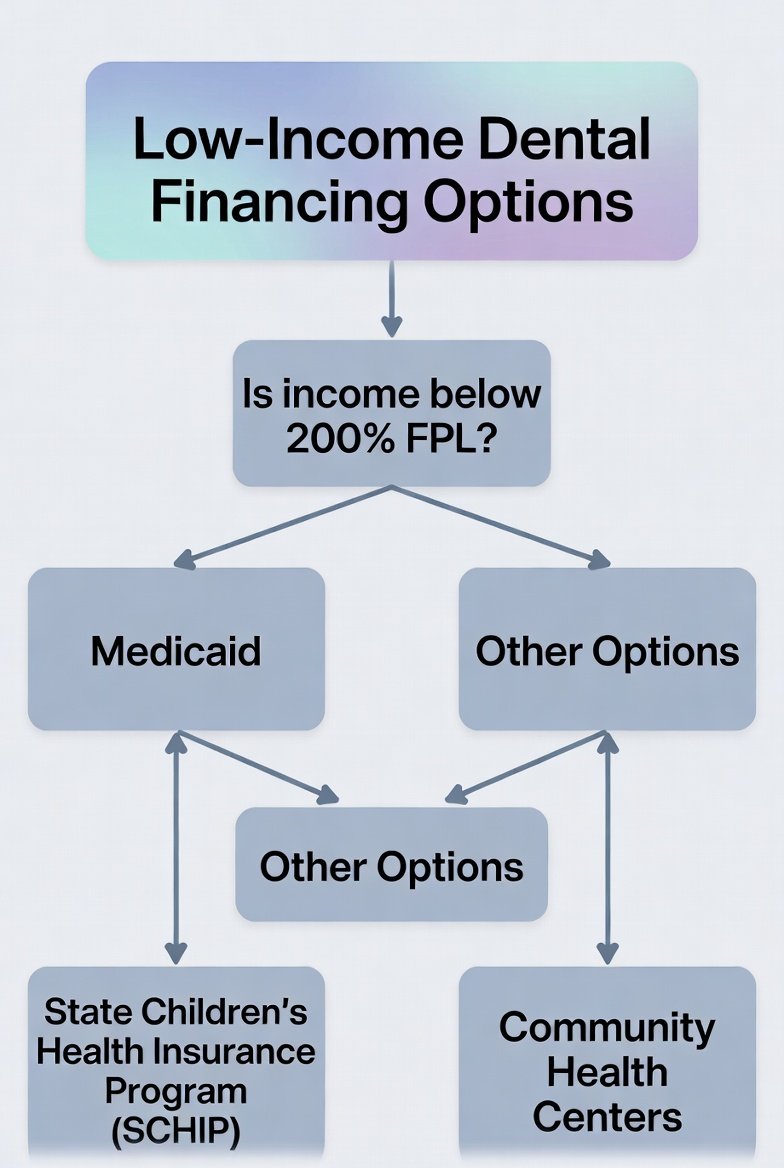
- Reduced-fee care (sliding fee clinics, community health centers)
- Public coverage checks (Medicaid adult dental varies by state)
- Low-cost providers (dental schools and teaching clinics)
- Simple in-office payment plans (written, realistic, no surprises)
- Credit-based financing only after the bill is reduced and terms pass a strict test
This order prevents you from financing a bill that could have been much smaller.
Quick Reality Check (Read This Before You Sign Anything)
- Many HRSA-supported health centers use formal sliding fee discount programs with eligibility rules and discount schedules.
- Adult Medicaid dental benefits vary by state and by procedure—verification is required.
- Healthcare dental financing products can involve lack of transparency and deferred-interest risk if conditions aren’t met.
Verify before signing: get (1) the written treatment estimate and (2) the full terms in writing—fees, deadlines, and what happens if you miss a payment.
The 10-Minute Triage: What Kind of Dental Problem Is This?
Emergency (pain, swelling, infection, broken tooth):
Stabilize safely first.
Routine (exam, cleaning, simple filling):
Best for lower-cost clinics and dental schools.
Major work (crowns, root canals, dentures, multiple extractions):
You need a written plan before comparing options.
The Operator Plan (7 Steps)
Step 1: Get a Written Estimate (Not a “Monthly Payment”)
Ask for:
- Line-item treatment plan
- Total cash price
- Separate charges (imaging, anesthesia, lab fees, follow-ups, temporaries)
- The next decision point (what changes after the exam)
If you can’t see the full price, you can’t make a safe decision.
Step 2: Reduce the Bill First (Highest ROI Move)
Option 1: Community Health Centers / FQHCs
Ask:
- “Do you offer dental services with a sliding fee discount based on income?”
- “What documents are needed for eligibility?”
- “Can I apply before the visit?”
Option 2: Dental Schools / Teaching Clinics
These clinics often provide reduced-cost care. You trade time for savings.
Option 3: Nonprofit / Safety-Net Clinics
Availability varies by location—verify locally.
Step 3: Check Medicaid (But Don’t Assume Adult Dental Is Included)
Ask exactly:
- “Do you cover this procedure for adults?”
- “Is prior authorization required?”
- “Which dentists accept adult Medicaid dental for this service?”
Step 4: Reduce the Scope Before You Pay
Ask:
- What’s medically necessary now vs deferrable?
- Are there lower-cost alternatives?
- Can treatment be phased?
Step 5: Use a Pass/Fail Test for Payment Plans
PASS if:
- Total price and terms are written
- Monthly payment fits your budget with buffer
- No surprise add-ons outside the agreement
FAIL if:
- Terms aren’t written
- Deadlines are tight or unrealistic
- You’re being rushed
Step 6: If Credit Is the Only Option, Treat It Like a Contract
Before agreeing, confirm:
- APR after any promo
- Whether interest is deferred
- Exact deadline and penalty trigger
- All fees
If this can’t be explained clearly, pause.
Step 7: Lock Your “Point of No Return”
Don’t sign until you can explain:
- Total cost
- Deadline
- What happens if you miss it
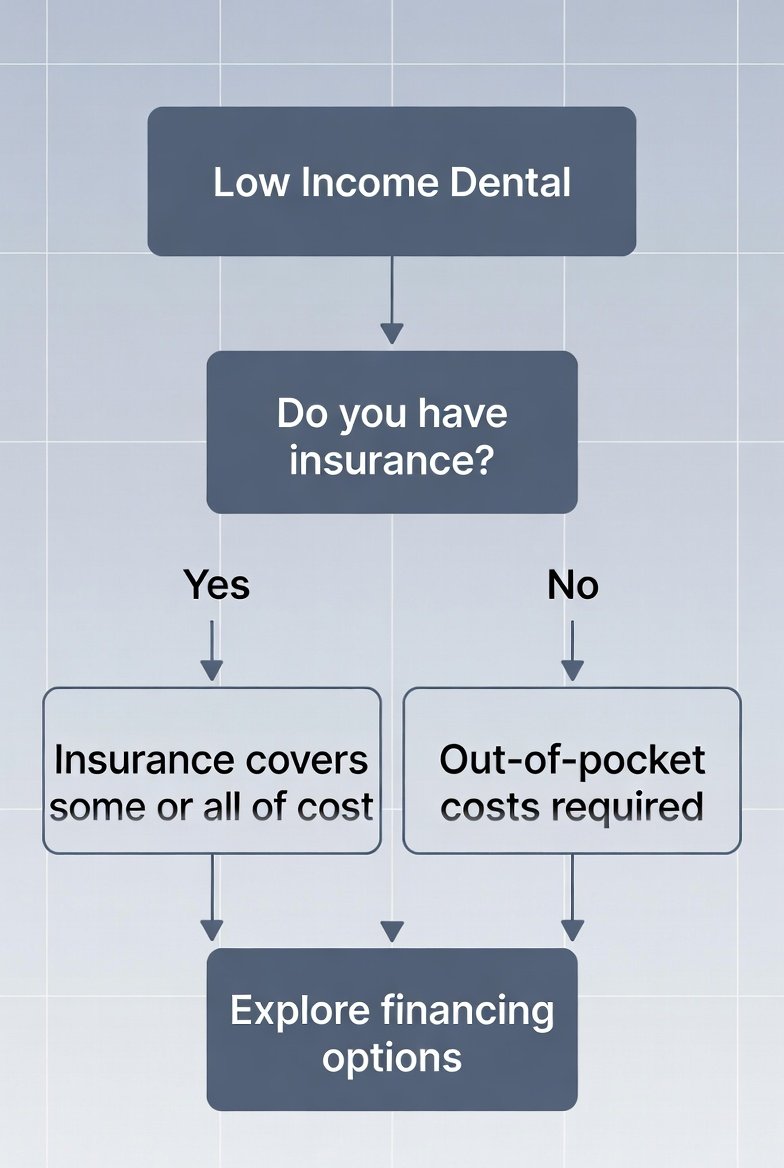
Where to Start (Real-Life Flow)
- Get the written estimate
- Call 2–3 reduced-fee options
- Verify Medicaid (if applicable)
- Compare total prices
- Choose a plan that passes the checklist
Decision Table
- Emergency: Reduced-fee urgent path
- Routine: FQHC or dental school
- Major work: Written plan + reduced-fee comparison
- Financing offered: Pause + written terms
Phone Scripts (Copy/Paste)
Sliding Fee Clinic:
“Do you offer dental services with a sliding fee discount based on income?”
Dental School:
“Do you offer reduced-fee dental services for adults?”
Medicaid:
“Do you accept adult Medicaid dental for this procedure?”
Payment Plan:
“Can you give me the total cash price and full payment terms in writing?”
Bottom Line
Low income dental financing without insurance works best as a sequence, not a product:
Lower the bill → verify coverage → phase care → choose the least risky way to pay what remains.
If anything depends on tight deadlines or unclear terms, treat that as a stop signal.